 Chat with us
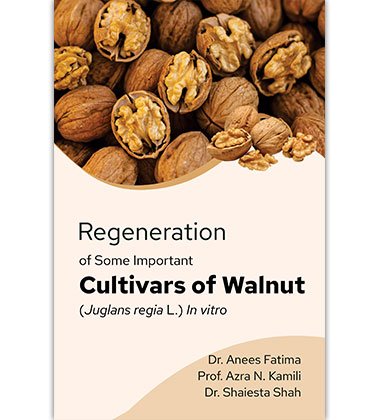
This book will present the latest research on Regeneration of Some Important Cultivars of Walnut (Juglans regia L.) in vitro. Throughout recorded history, the walnut has widely been regarded as the best nut among all nuts. In forestry terms, walnut is considered the noblest of the trees, because of its physical and chemical characteristics, together with its aesthetic qualities, which makes it a most beautiful and valuable tree. It is tree of great utility and almost every part of it is highly valued. Walnut generally does not respond favourably to the vegetative propagation methods under field conditions as is possible with majority of other temperate fruits. Plants raised from direct nuts have low productivity and are not true to the parental stocks because of high cross-pollination behaviour. Presently very little attention being paid in the valley for the production of these important fruit trees forces us to resort to some unconventional method of propagation and to see the potential of the technique for quicker propagation and uniform plantation of walnuts. There is scope of increasing the production and productivity and it can be increased to great extent by the application of modern propagation technology and efficient input management system.
It thus seems that the main application of walnut plant tissue culture could form a possible means of achieving more and faster propagation rate, genetic improvement and introduction of elite traits (special wood and nut quality) in J&K. The protocol established here can form a base for developing a complete micro propagation protocol for large scale multiplication of the plant so that it is commercially exploited to meet the future demands of walnut industry. Application of such technique at commercial level can definitely help enthusiastic entrepreneurs by way of career advancement and upliftment of walnut industry. Any effort in boosting its quality production would go a long way not only in extending its area but giving a boost to the economy as well, and earning valuable foreign exchange for country as a whole.
This book will cover Regeneration of Some Important Cultivars of Walnut (Juglans regia L.) in vitro. Based on the author’s extensive experience and written in an engaging style, this highly readable book will appeal scholars from various disciplines. It will be also a valuable reference resource for academicians, researchers, students and teachers wanting to gain insights into the Tissue culture techniques and regeneration of different cultivars of Walnut (Juglans regia L.) in vitro.







Book Bazooka Publication बुक बज़ूका पब्लिकेशन
