 Chat with us
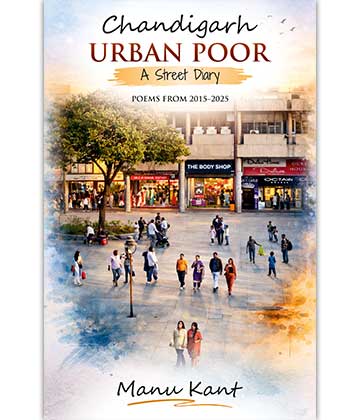
These fragments must not be mistaken for neutral observation. They arise from, and point back to, the material structure of society. What appears as “small moments” in Chandigarh is in fact the everyday surface of class relations under capitalism.
The recurring figures—vendors, ragpickers, delivery workers, domestic labourers, beggars—are not incidental characters. They belong to the working class and the reserve army of labour. Their presence across markets, traffic lights, and pavements reflects a system that continuously produces surplus labour while extracting maximum effort from those employed. The child selling strawberries, the worker eating a minimal meal, the labourer resting between tasks—these are not personal stories. They are outcomes of economic necessity shaped by class position.
The repetition across these notes is itself revealing. Work extends into heat, into night, into illness. Rest is brief and functional. Consumption is minimal and often numbing—cheap liquor, sparse food. Even small pleasures appear as compressed, momentary releases within a life structured by labour. This is not accidental rhythm. It is the rhythm of exploitation.
Ideology also appears, but in a specific form. Religion, ritual, and habit—whether a festival costume, a chant, or a quiet act of devotion—do not emerge here as organized power but as lived responses to material conditions. They provide continuity and emotional shelter, yet they also reflect the limits imposed by those same conditions. The clinic with bottles of water, the casual presence of faith practices—these suggest how ideology coexists with and adapts to everyday survival.
Equally important is the spatial contrast. The near-absence of people in affluent zones, versus the density of labouring bodies in markets and streets, shows the segregation inherent in class society. Production and service are visible; ownership and control remain distant, insulated, and largely unseen. The city is thus divided not only by space, but by relation to labour and capital.
Form and content align with this analysis. The brevity of each piece is not stylistic minimalism alone—it mirrors the fragmented, interrupted life of the working class. There is no extended reflection because the conditions themselves do not permit it. Each fragment is a snapshot of a process that continues beyond the frame.
Taken together, these notes function as a material record. They do not romanticize poverty or individualize suffering. Instead, they reveal how ordinary life is structured by class relations, how labour shapes time and movement, and how ideology and survival intertwine. What is presented is not a collection of isolated scenes, but a continuous, underlying reality: the reproduction of working-class life under capitalism.







Book Bazooka Publication बुक बज़ूका पब्लिकेशन
